
Business Insights
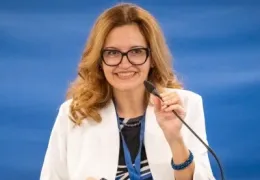
We recently had the pleasure of meeting Stefania Ciraolo, Head of the EIB Group Office in Hungary. The EIB lent €759 million in Hungary last year – thanks to her openness, we can share how it works, what it looks for in a project, and how Hungarian developers can tap its financing.

GE trained its people on the company's own live problems and tied every course to the next career step. Former GE Hungary Dr. Farkas Bársony explains what the "GE school" gave its graduates that ACCA or an MBA cannot.
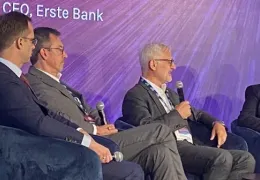
KEY MESSAGE
Hungary does not need more money. It needs more productive investment. Liquidity is abundant and banks are ready to lend. What holds companies back is a lack of confidence, predictability and a clear economic narrative. New government initiatives are improving sentiment, but confidence has not yet fully returned.
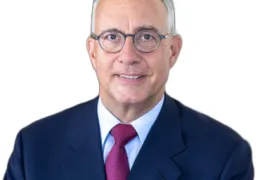
Most CEOs believe they're accessible.
Every month, for seven years, Dale A. Martin — former President & CEO of Siemens Hungary — sat down one-on-one with two employees he'd never otherwise meet.
Not his direct reports. Not division heads. Two people, pulled from deep within the organization, six months after they'd joined.
No agenda beyond two questions:
"What's the atmosphere like?"
"What can we improve in our processes?"
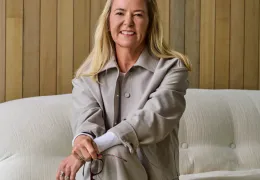
If we are evaluating a business, my favorite thing to do is go look for myself.
I recently visited a newly opened Lululemon store in Budapest. There was no line, no crowd — but the store manager told me revenue has been solid, so the quiet floor was more about timing than trouble. I also checked how customers are rating the store and the product: the quality gets praised consistently, but the pricing comes up just as a complaint - prices in Budapest actually run higher than in Canada, despite Eastern Europe's noticeably lower purchasing power.
The real fix has to come from North America. That's where the brand lost its edge, and that's where O'Neill will be judged.
But personal impressions only go so far — here's what the numbers say as a starting point for her:

In a wide-ranging CNBC interview, Becky Quick sat down with Warren Buffett for a conversation that went far beyond markets, touching on macro conditions, capital allocation, leadership, and long-term thinking.
A year after stepping down as CEO of Berkshire Hathaway, Buffett’s answers were not about prediction or urgency. They reflected something more consistent: a lifetime framework for making decisions under uncertainty.
Below is the full conversation, structured through Becky Quick’s questions, with Buffett’s answers expanded in depth.


5 essential entrepreneurial skills for success are;
- concentration
- organiztion
- innovation
- discrimination and
- comunication
What is Faraday's electric motor?
An electric motor converts electrical energy into physical movement.
Faraday's motor used magnets and wire to create electric energy.
To make it, he took a nail and around 100 loops of copper wire. In the middle of the nail he placed a hole and put a wooden spindle into that hole, he wrapped the nail in the copper wire and connected it to a battery.
He then took a horseshoe-shaped magnet and placed his copper wrapped nail in the middle of the horseshoe.
With this, he saw that the wooden spindle would turn.
This was because the two opposing poles of the magnet were working against one another creating energy!
This simple mechanism would eventually become the electric motor that works in many things used today, like computers, mobile phones and electric toothbrushes.